This free blog has been converted into a poor man's web site. Read it from top to bottom, then hit the link to the bottom of each page for Older Posts, and keep repeating this as you read on to the end of it.

8.12.06

The Kids Had to All Wash Their Hands Before Eating Lunch


Photography by Spec. 4 David R. Crews

I thought it was great how the children had settled right down after that fun-filled-wild-mayhem, when their teachers told them it was time to wash their hands for lunch. They were back to being well disciplined, quiet and polite in the company of grownups again - as is 'the norm' in Asian societies.

I remember that while printing copies of this shot, I was fascinated by how I had frozen the water in mid-stream like that, because I was learning about what my new professional grade camera equipment was capable of.

The Kids Sit Down for Lunch


Photography by Spec. 4 Crews

After I took this shot, the Okinawan interpreter came over to the Army Officer in charge and told him to go tell me that I could not use this photo for official publication, because the school lunches were substandard even though they were 50% subsidized by the U.S. Government.

Later, in my photo lab, I had to make myself one 4x5 print of it to see what the problem was, but the lunch doesn't show up well because all the other shots I had taken that day were outside so I was not using a flash when I grabbed this shot real quick. The second after I took this shot, as I lowered my camera from my face, I was deeply moved by the gentle, sweet looks on their faces; they must have felt surprised, honored, and pleased to be photographed so many times by an official American Army Photographer that day. That really made me feel warm inside; this made me want to take some more shots, so I had stepped back from the classroom door and was kneeling down and pulling my flash out of my camera bag when I was told not to take anymore photographs of the school kids and their lunches. The officer was very discrete about, and he cupped his hand halfway over his mouth as he bent down towards me to half whisper the official command, he had a genuinely friendly-hey army buddy smile on his face, and was thoroughly polite about it.

Growing Up with Nuclear War Fears in America


So far, this web site has shown you the kind of a US Army photographer that I was. I also have a story of military madness to tell you. But before I get into the meat-of-the-matter, I am going to tell you how I grew up to be the full-blooded, Anti-Communist, Anti-Taliban, Anti-Al-Qaeda, Anti-Fascist, tried and true Soldier of Freedom that I sure-as-hell always will be.


Part One: The Home Show


I have lived in fear of nuclear holocaust my entire life.

When I was six years old, in 1956, my parents took me to a “home show,” which is one of those convention center kinds of affairs where all things new and fantastic, for the modern home, are demonstrated and sold. There was a family sized fallout shelter on display there that we took a salesman’s demonstration tour of. It was a cement block, above ground model of an underground bunker that was smaller inside than my bedroom. It had a little hand crank air intake filter that I thought was really neat. There were suggested supplies, in there, that should be stored in one, like board games, books, food and water.

I was a modest child, I saw that there was no place to pee and poop in private, so I asked the salesman about that. He said that you would have to use a bucket to pee in and have a small, lidded barrel to pour it into, and that you had to take a dump in the corner.

I blurted out, “Right in front of everybody!?”

My father laughed and asked the salesman, “Yeah, well then what do you do with it.”

The salesman showed us a tin container of chemicals that would cut down on the - offensive to humans but attractive to flies - fragrance from the feces and help to decompose that solid human waste.

That created a fearful, indelible impression upon my maturing young psyche.

During my elementary school days, we had monthly air raid drills in school. The first few years, we students had to craw up into a ball under our desks. That was the best protection if bombs and roofs began falling down all around you.

Then a new directive came down through guv'ment channels. This is what we children of the 1950s were taught:

The United States Government had realized that it wouldn’t be plane loads of traditional bombs that our enemies would drop on us anymore; it would be one, modern, muti-megaton nuclear bomb per wide geographic area. There would be no danger of multiples of bombs falling and crashing in school roofs down upon students and teachers any more. If a nuclear bomb fell in our area, it would be a giant horizontal shock wave blast with super heated gasses that got us. So instead of hiding under desks during monthly air raid drills, we went out into the hallway to "duck and cover."

If a nuclear bomb detonated real close to us, then we all instantly fried and died - in a mighty, mighty intense flash - right there sitting in our schoolroom seats. There would not be enough time to run out into the hallway to duck and cover.

If the nuke detonated far enough away, and we kids had time to run out into the hallway to duck and cover, the bomb blast's horrific shock wave would blow in all of the windows on the side of the building that the blast came from, pass over and around the school, and then deadly shattering glass of the windows on the other side of the building would blast back into the schoolrooms when the shock wave came back through on its return trip that is caused by a vacuum effect sucking it back towards the point of where the nuclear bomb detonated.

If we schoolkids survived that by being out in the hallway, we had to head for the basement, where fallout shelter supplies were stored. There are still fallout shelter signs on the elementary school building where I attended first through sixth grade.

We were all taught the new air raid response technique and the reasons for it in a school assembly one day. After that, during air raid drills, everyone went out into the hallway to duck and cover.

Eventually, schools stopped having air raid drills; people figured out that it was useless to try to survive a nuclear blast, due to the deadly nuclear contamination of everything and everyone anywhere near the where the blast had occurred. Everyone was probably going to be dead within two weeks, anyway.


Part Two: Better Dead Than Red

I have been prepared to defend my country, my family and every American’s freedom ever since I got a grasp on what it all meant.

That was way back when I was in elementary school.

The Cuban Missile Crisis, of October 1962, occurred while I was twelve years of age and in the sixth grade in elementary school.

During the Cuban Missile Crisis, I remember very clearly watching my father watch TV way more intensely than ever before. It was in the olden days, before TV remote controls were popular. So when my dad was changing the station dial on the TV, to choose which show to watch, he often sat on a foot stool right there in front of the TV. But, during the terrifying Cuban Missile Crisis, he stayed there sitting on that stool instead of getting up and going to sit on the sofa and watch the TV show, that he had chosen to watch, as was his normal habit. He sat there all zeroed in on the TV like a cat watching a mouse hole.

He wouldn’t move.

It got weird to me, so I asked my Dad what all that stuff on TV about the underwater missiles being pointed at us and the Communist Cubans and Russians and Khrushchev vs. Kennedy really meant. I had always known that for my entire twelve years on earth we had had Communist Nuclear Missiles pointed at us every split-second of the day, from somewhere; so I was wondering what was so important about these new missiles being found only ninety miles from the southern shores of America.

My Father turned on his stool, looked me square in my eyes, his face never before and never again had such a soul draining seriousness about it, and he said to me, “It means that we may be going to war.”

Dad knew that it wasn’t going to be like World War Two, when he had spent so many harrowing moments, months and years at sea fighting in the US Navy, over in the South Pacific. This new kind of 1962 war was comin’ right there to him on that stool he was sitting on, with his family all around him, in the form of nuclear fire and brimstone raining down hell on earth.

When I was attending elementary school - Merritt Elementary School in Dundalk, Maryland - I had a male sixth grade teacher who was a twenty-six year old, recently discharged Air Force Veteran. He was the first male classroom teacher that we had ever had in my school. He had done his four years of college, then four years in the Boy Scouts, I mean Air Force (sorry, accidental slip on inter-service rivalry from an old soldier), then he came to teach at our elementary school. We children in the class liked the teacher a lot.

Sometime shortly after the Cuban Missile Crisis ended, one day during class, in the sixth grade, our male teacher gave us a lecture on capitalism vs. communism.

He went up to the black board and started writing:

Capitalism vs. Communism

Better Dead Than Red (this is still my favorite)

It’s better to die on your feet than to live on your knees. (I have always admired this sentiment)

Kill or be Killed (then as now, you betcha)

Meat Eaters vs. Rice Eaters (I fell for this one)

And maybe a few others, that I can’t remember.

I don’t know if he had been lectured on or brain washed with this subject in the Air Force, or else he had been enamored with the ideals when once spealled out during a lecture, when he had heard it in the military or somewhere, or it had come from his favorite American capitalistic propaganda pamphlet.

When my classmates and I had been about three years younger, we had had that air raid drill change of tactics school assembly, when American schools changed from practicing reacting to the threat of conventional bombs being dropped on them to the threat of one humongously powerful nuclear bomb being dropped near them.

Then we had three more years of worsening nuclear fears, as we read more about nuke warfare in magazines and newspapers and also saw TV news stories about America’s nuclear war race with Russia and China.

When that male teacher started in on that capitalism vs. commie-ism lecture, we were ready to listen to that man. We students sat straight up in our chairs, then sat still, silent and serious the entire time he spoke to us.

Most of the capitalism vs. commie-ism lecture points, that the teacher spoke of that day, have fairly well stood the test of time. He had read the entire English language version of the Russian Commie Hand Book On How To Overthrow Capitalist Governments, and he pulled his copy of it out and showed us some of the written propaganda that is in it. He declared that it was all commie crap, and, basically, it was. I think? I don’t know. Was it a true translation of an actual Russian Commie pamphlet?

Even back then, I suspected that it may not have been a true translation or even a genuine copy of commie crap. It was written in the forceful style of all hard core propaganda that was a natural turn off to me back then and makes me laugh today.

I remember him showing us one page in it that had instructions for commie infiltrators and agitators. It instructed them to lie, cheat, steal, murder, commit acts of sabotage, disrupt the economy anyway that they could and do what ever else that they had to do to destroy capitalism in America and forcibly install a communist government on us here. Considering all that I have learned in my adult life about communist societies, that book definitely had some realistic facts in it. Not only are communist governing tactics miserable to have imposed on you, the gross national products of communist countries are dismal failures.

There was a part in the commie hand book that said that the best way to have a top notch nation is:

“From each according to their abilities, to each according to their needs. If one person drives a garbage truck, and another person is a doctor, as long as they both do their jobs the best that they can, then they each deserve the same rate of pay and to live in the same kind of houses.”

But the teacher said that life doesn’t work very well that way.

As a kid, that was confusing, because I thought that that meant that if everyone worked hard and shared everything equally, like we were taught to do all through elementary school, then the whole world would get along just peachy keen.

Oh my goodness!

That shows the juvenile truth about communism!

Well dog my cats!

You are a capitalist like me. You know that we humans need to be inspired by our food-clothing-shelter basic needs plus a desire to better ourselves and live finer lives, with our loved ones, in order for us to have the inner drive to be able to establish and maintain a good, safe, secure, prosperous society. That set of facts was in the pro-capitalist section of our teacher’s lecture.

“It’s better to live on your feet or die on your knees” (not according to that old guy in the hotel in Catch 22), and “better dead than red” are debatable ideals, and each has its time and place, but that all laid some heavy thoughts upon the minds of us sixth graders.

Although “kill or be killed” is always right in any situation that absolutely is a kill or be killed situation, it is not something that most twelve year old minds can think through to the point of knowing when to do what to whom.

That “rice eater vs. meat eater” bit in his lecture certainly fell short of its declarations, though.

That teacher assured all of us young Euro-American children, in our little segregated school house, that: we would always win wars against Asians; they are smaller in stature than us, and they live off of a diet that often consists mainly of rice, so therefore they are weaker than us; we are big, muscular, strong, healthy meat eaters; we will always beat little rice eaters in war.

That sure as hell ain’t so! Ask any Nam Vet. Before their first one year tour in Vietnam was over, many of them were calling that little lifetime rice eater called Charlie Cong: Mr. Charles or Sir Charles.

All in all though, on that day in 1962, my sixth grade teacher effectively instilled in me an already growing firm conviction to kill commies for American Mommies, until I was fed to the worms.

Part Three: The Blue Room

From as far back as I can recall - in my near-60-years of living on God's Good Earth - I have been aware of the hard, cold, brutal fact that communist controlled missiles are pointed at me anywhere I may be in the United States of America. Though the Cold War of American freedom loving countries verses freedom mangling communist countries has been declared to be over, there are still communist and other missiles that have their guidance systems programed to strike targets all over the USA.

When I was in the eighth grade, during 1963-64, at Dundalk Junior High School in Baltimore County Maryland, one of our teachers took our one class on a field trip to "The Blue Room" in Fort Meade, Maryland - where her husband was a captain in the US Army. He served as officer in charge of The Blue Room. It was a pleasantly lit room with all blue lights, no white lights, lots of radar screens with Army operators steadily watching them, and a clear, thick glass wall with a soldier on the other side very quickly and deftly - quite amazingly - writing backwards on his side of the glass - words which were frontwards on our side - then very quickly erasing some of the words and then deftly writing some more stuff backwards that we could all read frontwards from where we were standing.


First, it was explained to us schoolkids that blue lights are the easiest artificial light on the eyes and that is best for the army guys spending long hours everyday carefully watching the radar screens. Those soldiers were keeping track of the radar blips of every airplane flying in the Baltimore Washington flight corridor.

Then we were told about the guy writing backwards. It was then that we noticed several soldiers seated behind the backwards-writing soldier and the seated soldiers were talking on telephones. The captain said that the guys on the phones were talking to air traffic controllers at (what was then) Friendship Airport. The air traffic controllers were steadily telling the men on the phones the flight numbers and other pertinent info of planes that the air traffic controllers were in contact with. The men on the phones were telling the man writing backwards what the info was, so that he could write it on the glass wall for the radar operators on the other side of the clear wall to see and compare with what they saw as blips on their radar screens. Hence, any flying plane not double checked like that would be considered to be possible enemy aircraft sneaking around up there either spying on or ready to attack Americans.

It was right about then that I noticed right next to the closest radar operator man's hand there was a four inch wide, red, translucent, plastic, double hinged, safety cover over top of a three inch wide, solid black plastic button that had FIRE written in white on it. It was obvious that all the radar operator had to do was to move his hand a few short inches, flip that double hinged red, translucent, plastic, safety cover off of the top of that black plastic button with FIRE written in white on it and he could push the FIRE button down with the heel of his hand and shoot a missile up into the air. It was obvious, but I was so stunned at seeing it - THEE! BUTTON! (one that could begin a war) - there so readily accessible (I could have reached over and very easily had FIRED the missile me-own-young-self) that I blurted out, "You can push down on that button right now and shoot off a missile!?!?!"

The radar guy sitting there in a chair at the radar screen looked up into my quite animate, adolescent face, he smiled rather sheepishly, and with an ever-so-slight nod of his young-American-man's head and in a restrained, mild voice he said, "Yes."

I knew right then and there that he did not want to ever have to flip that red safety button off and push down on that black FIRE button. Everyone in that room was feeling the exact, precise, same train of thought as the young soldier by THE BUTTON.

Then the captain told us young, adolescent, eighth graders something that I could never forget. He told us that the missiles controlled by THE BUTTONS in the Blue Room were all located in hidden, buried underground missile bunkers all over Maryland. The captain said that at that very minute a farmer may be may be riding on his tractor, whilst plowing his farm field that is located over top of one of those buried bunkers, and if the missile in it had to be fired then the two feet or so of topsoil on top of the bunker would begin to quake and shake and slide off the bunker doors as the thick, heavy, steel, bomb blast proof doors spread open upwards and flipped the farmer and his tractor off to the side as the missile raised up and shot off into the wild blue yonder - at enemy aircraft that wasn't crafty enough to fool our radar systems and the dedicated soldier radar operators.

But that is not the most unforgettable aspect of the day.

The most unforgettable information we junior high school kids were given privy to, that afternoon in Ft. Meade, was that the US Army had missiles pointed at Fort Holabird in my great American hometown of Dundalk, Md. and some where also pointed at the Bethlehem Steel Mills in Sparrows Point, Md. a few easy miles from Dundalk and where I went several times a month during my entire growing up years, because my grandparents lived in the small American mill town there and my family went to church in that wonderful, family friendly mill town named Sparrows Point.

On that 1963-64 day in Ft. Meade's Blue Room, we junior high school children from Dundalk, Maryland were hit with the brutal realization that we not only lived 'under the gun' of commie-rat missiles - as we had always known - we lived with the very real possibility that American missiles would one final day wipe us and our families, friends and neighbors right off the face of the earth.


I accepted then, and still do, as completely reasonable and sensible why our own missiles had been pointed at me and mine during the entire time that I was growing up in Dundalk and Sparrows Point.

Fort Holabird contained the - top secretive and also positively pertinent to America's well being - U.S. Army Intelligence School. Bethlehem Steel was known for producing war armaments for America and our allies. If the United States' enemies were to set off one of the newest modern war terrors - The Neutron Bomb - over the Dundalk and Sparrows Point areas - the effects of a Neutron Bomb is to kill all life below its detonation area but not break a single twig on a tree - the enemy would capture Ft. Holabird and Beth Steel intact. They'd only have to conquer a small section of the East Coast of the USA in and around Maryland at first, then get the intel files, fact books, spy equipment and other Top Secret stuff from Holabird to know a whole lot more about how to conquer the rest of the United States, along with the entire world; in-depth intel files on America's friends as well as our enemies were maintained and stored at Fort Holabird; and the enemy would also have been able to produce fresh armaments made at Beth Steel to do the rest of the conquering with.


The enemy could not be allowed to capture Fort Holabird and the Bethlehem Steel Mills. I preferred, and still do prefer, death over the losses of such supremely valuable assets to my enemies.

Fug it. When ya gotta go, ya gotta go.

Introduction to A True Tale of Military Madness


I grew up believing in just about everything that had ever been taught to me by my family and by my public education. Too many of those beliefs were smashed to bits and soon dissipated into thin air, while I served in the United States Army as ‘Official’ Brigade Photographer for the 30th Artillery Brigade Air Defense missile unit on Okinawa.

I was serious about soldiering, dedicated to doing a great job at my assigned tasks; I zoomed from Private E-1 up to Specialist Fourth Class in the first ten months of my military service; I knew that I had become an excellent photographer and was going to be one for the rest of life.

Unfortunately, I was illegally assigned to the 30th Artillery Brigade on Okinawa, in 1970.

I was shattered by the facts that: I was never issued any camera gear to do army photo assignments; I could not order photography equipment or supplies; nor could I earn an advance in rank; and the hard, horrible fact that the photo lab I worked in was set up in a nuclear fallout emergency decontamination chamber was an intensely screwed up situation that had the very real potential of allowing millions of American casualties to occur during a nuclear war.

What was a young 20-year-old kid supposed to do about that?

Not one single US Army order ever given to me while stationed with the 30th Arty Bgde was legal. Not even the army discharge they gave me was legal. I am quite certain that, technically, I am still in the Army.

Keep on reading through this web site. I completely qualify, and provide witness information for, everything written here.

The Illegality and Immorality of My Assignment to the 30th Artillery Brigade on Okinawa


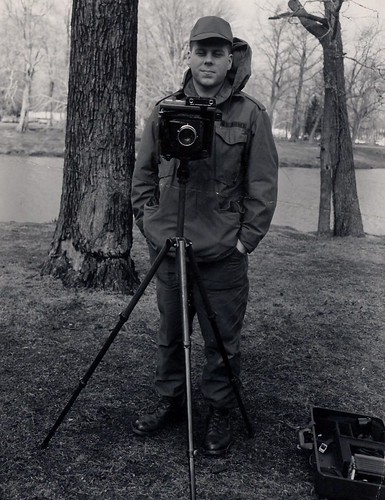
My first day at the US Army Photographic Laboratory Technician School in Ft. Monmouth New Jersey. Our first class assignment was for us brand new, and very happy, students to pair off and take a photo of each other. That's a 4 x 5 Graflex Speed Graphics large format camera, and at my feet is the rest of the issued gear plus the tripod that was mine to use for the next fifteen weeks. I loved every minute of photography school.


That's Specialist Fourth Class Crews there - yours truly - at the left side of this shot heading into position to photograph an approaching parade of 30th Artillery Brigade missilemen and all the other guys - every cook, clerk, and driver, etc. - who were my comrades-in-arms. The soldiers you see in the photo are the 30th Arty Bgde officers and their families. It was part of an all day change of command ceremony for our brigade commander. And I worked hard at photographing it all day then spent the the evening, till after 11 PM, developing film and custom, hand printing 90 4 x 5 photos of the event that were given out to all of the officers there.

I did several photo assignments of formal, 30th Arty Bgde events held at the largest officers' club on Okinawa. Those were quite relaxing and very tuned-in times for me; I was tuned in to any great photo op that popped up. My photographic specialty was - and always will be - candid photos with everyone in the shots looking their natural best selves and obviously enjoying each others' company. And I always got to sit down to eat the big, formal meal with the officers and their wives. It was the same with 30th Arty Bgde events held at the enlisted men's club. I also photographed the 30th Arty Bgde's family picnics, some command inspections, soldier of the month awards, and promotion in rank ceremonies. Everyone who asked, not just those who had the power to order me to, were given photos I custom hand printed for them. I was happy to do that - for the moral of the troops. It made those guys, along with their wives and children, feel good to send photos of themselves to their loved ones back home.

When I enlisted into the Army, in 1969, I signed up for three years - which was one year over the military draft’s requirement of two years of service. I voluntarily enlisted for a third year so that I could go to the US Army Photographic Laboratory Technician School at Ft. Monmouth, NJ.. After graduating from Photo Lab Tech School, I attained the rank of Specialist Fourth Class (E-4 after only ten months of military service, three months inactive - before I had to report to basic training - plus seven months active duty and I made E4 is an awesome accomplishment, which required hard work and dedication to duty). I had become a damned good soldier. Then I was sent to Okinawa.

My assignment to Okinawa was great news to me. Because, during the time that I was in Army basic training and studying at Photo Lab Tech School in Ft. Monmouth, not one soldier, whom I ever knew of, wanted to be sent to Vietnam. Neither did I.

Besides being trained in a set of professional skills, that I had an interest in, and natural talent at making good use of, the one thing that I wanted most, to get to do while serving my country in the military, was to be sent as far away from the East Coast of the United States as possible. I had lived all of my nineteen years on Earth there, and it was time for a change; I wanted to travel, and see some of the rest of world.

On Okinawa, the Army assigned me to Headquarters Battery 30th Artillery Brigade as ‘Official’ Brigade Photographer.

The 30th Arty Bgde was a missile unit. We had great big Nike Hercules Nuclear Missiles on some of my unit’s thirteen missile sites! And, we had smaller Hawk Missiles on some of our missile sites too.

Our brigade motto was, "Always On Target."

The Island of Okinawa sets way out from Communist China’s coast line, at just exactly the right spot for an alert, fully prepared missile brigade to be able to steadfastly maintain a 24-hour-a-day, 365-day-a-year missile defense shield. The 30th Artillery Air Defense Brigade was assigned to be there, on Okinawa, to help defend the free world from Communist Chinese nuclear attack.

I was the first Army trained photographer to be assigned to work as the 30th Arty Brigade’s ‘official photographer’. The 30th Arty had finagled paperwork to get themselves a real photographer. They wanted their-picture-taken as often as possible. The entire situation thoroughly violated countless Army Rules and Regulations. I do not know what I was listed as on the unit roster, or if I was listed at all.

Before I was assigned to the 30th Arty Bgde, their photographers had been soldiers from the brigade who were supposed to be working there as radar techs, company clerks or whatever their original jobs had been in the brigade. But they wanted to be photographers, so they eagerly volunteered to shoot and print photos of the 30th Arty personnel at work and play.

The man whom I was replacing, as brigade photographer, was Spec 5 Swigget (Swiggert? I’m not sure of the spelling). Swigget told me that his mother owned the franchises to three Pepsi Cola bottling plants somewhere in the Mid-West States, and that she used to send him a check every month that equaled half of his Army pay, so that she could declare him as a deduction on her income tax. His mother used to donate tons of Pepsi Cola to political campaigns. She used those political connections to help her son in the Army get away with lots of crap that no one else could. Swigget told me that he had "HAS POLITICAL INFLUENCE" stamped on his Army record folders, so that everyone knew not to mess with him and to outright coddle the guy.

When Swiggett gave me my inaugural tour of the 30th Arty Bgde photo lab, I was stunned by the real crotch kicker in this historic narrative == the brigade's photo lab was not only illegal, it was set up in the nuclear fallout decontamination chamber for an underground nuclear fallout shelter communications bunker called "The Mole Hole." That secretive bunker was hidden in a hillside next to the 30th Artillery Brigade Headquarters office building.

Holy cow chips Batman!!

That photo lab compromised our stated military mission!!!

The Mole Hole was snuggled into that hillside right next to headquarters, because if America got into a nuclear boxing match with Communist China, the 30th Arty would need a safe, secure nuclear fallout chamber full of radio gear and other equipment that we would need to be able to coordinate offensive and defensive strikes with our missiles, along with the missiles of stateside military units, US Navy submarines and other war ships, US Air Force and US Marine jet planes, etcetteras, against enemy aircraft with nuclear bombs aboard and passing overhead of us on their way to obliterate my family, friends, neighbors, former school teachers and school mates and everyone else in America.

If the area immediately around brigade headquarters and the Mole Hole bunker was not obliterated by a direct hit from an enemy nuclear war head, the area might be contaminated with nuclear fallout snow from war heads that had dropped on other parts of the island. In the case of that scenario, certain, pertinent 30th Arty technicians and command personnel, who were authorized and trained to use secret codes and all that stuff, had to be in the bunker. They had to be able to verify who they were when they contacted outside military commands to inform them of what condition the Okinawan US Military’s Bases were in and to supply any info that the Mole Hole guys had on enemy movements, casualty figures and all that jazz. If any of those pertinent personnel were not in the bunker at the time of the nuclear attack, they would have to hightail it over to the bunker; but before they could be allowed into the bunker, they would have had to have been decontaminated of any nuclear snow that may have fallen on them.

The main door that we used to enter the Mole Hole, to go to work everyday, was a large, thick, steel, bank vault style door that was to be closed, locked and guarded if a nuke attack occurred. About thirty feet from the vault door, there was a regular sized steel door that was the entrance to the decontamination chamber. That second door was never used and was always padlocked inside and out. In the case of a nuclear attack, there would have been armed guards at that door too, after the two padlocks on it - one inside and one outside - were removed.

When the hightailing technicians and command personnel made it to the Mole Hole, they were to identify themselves to the guards, then step through the regular sized door and into an outer chamber, disrobe, and step into a shower to wash off the nuclear snow - so that they did not contaminate the other soldiers who were already in the Mole Hole; then the authorized personnel stepped into an inner chamber to receive some of the clothing that was kept in the bunker in large wooden crates that were full of necessaries and were always kept there for a two week stay underground.

The lab’s photo enlarger and print developing trays were on a tall, heavy metal table that blocked the padlocked door which gave access from the outside into the tiny outer room of the decontamination chamber. There was also a refrigerator in that cramped space for keeping film and photo paper in. Black curtains were hung across both open sides of the decontamination shower, so that we could keep white light (it ruins photo paper) out of the enlarging area of the darkroom. Then, in a small, janitorial closet sized inner chamber, where the decontaminated soldiers were to be given clean clothes, was where the photographers' print washing and drying equipment was located. There was also shelving in there for photo supply storage. There is no doubt that all of that negated any possibility of any quick, efficient use of the nuclear emergency decontamination aspect of the chamber.

Had that decontamination chamber ever been needed in an emergency, it would have been quite a frantic mess when the Mole Hole guys would have had to try disassembling and moving all of those heavy metal photo lab furnishings, the darkroom and other photo equipment plus the photo developing chemical supplies out of their way while dealing with freaked out, semi-nuked soldiers who were trying to get past armed guards and into the relative safety of the underground bunker. Of course, there would have also been all kind'sa unauthorized personnel trying to bust their way in with their wives and kids and all. "JUST TAKE MY BABY; PLEASE LET MY LITTLE BABY IN THERE!!"

Clearly, my photo lab was against Army Rules and Regulations.

Then Swiggett informed me that I could neither order any photo equipment nor any kinds of supplies - at all - to do my Army photo assignments. I had to find some way to scrounge them up somehow. That really took me aback.

In those days, both photo and stereo equipment that was sold on Okinawa usually cost no more than 40% of its stateside prices. Naturally, at those low prices on Okinawa, I intended to buy myself some top notch professional camera equipment anyway, so I ended up using my personal camera gear, and sometimes my money for film, to do all of my Army photo assignments.

On my second or third day at the 30th Arty Bgde, Swigget informed me that I could not advance in rank while I was there.

I was assigned to that unit for eighteen months, and, at that time, in the US Army, anyone who was posted overseas for a year or more usually got a promotion in rank if they did just a half-decent job at their MOS (Military Occupation Specialty -official job). So, I asked him why I could never advance in rank at the 30th Arty.

He told me that his MOS was not photography, but that he was being paid, by the Army, to work in an office in the 30th Arty Bgde’s headquarters office building. Then it sure enough shocked me, when the next thing that he informed me of was the hard, cold fact that there was no slot for a photographer anywhere in the 30th Arty Bgde. Consequently, when promotion opportunities came down from above, I could not apply for one.

Swiggert told me that when opportunities for promotion came down they would be distributed amongst the various army units something like this: three soldiers in a unit get to go from E2 up to E3, one soldier gets to go from E3 up to E4, and so on. The individual soldiers in each unit then had to compete for the promotions by proving that they were most worthy for them through their personal conduct and efficiency ratings, their MOS evaluations, maybe recommendations from their sergeants and officers. I don’t recall all of the exact terms or requirements that he cited, but it was by achieving requirements like that that a soldier had to show that they were worthy of the prize of a promotion in rank. Swiggert informed me that it was the fact that I could never receive an evaluation of my MOS that prevented me from getting a promotion, because my MOS was not authorized to be in the 30th Brigade.

I received my discharge from the Army while in the 30th Arty, and I can show you on my discharge records this official statement: “Soldier has no record of evaluation in his MOS.”

There were two guys working as photographers for the 30th, when I was first assigned to work there. One was Swiggert and the other was named Medley (not sure of the spelling). They were about as lackadaisical, nonproductive and sloppy about their photography as could be. Medley turned in 8×10 photos printed backwards and with white, photo chemical thumb prints all over them. Medley was off photographing, then in the lab developing and printing, his own stuff more than the 30th Arty’s; because he had a contract with a travel magazine that had paid him to do travel photos of Okinawa. It infuriated me. Swiggert just didn’t give a damn. Them two individuals had reputations for taking three months to get photos printed after they had shot an Army assignment. But when I took over the lab, it averaged me three days from assignment to handing in a full set of prints.

I asked Swiggert how he got away with being the way he was in the Army. He replied, while pointing his finger over at the 30th Brigade Headquarters office building, “I’ve got too much on too many of them for them to do anything about it.” My immediate guess at the time was that he meant the ins and outs of our illegal photo lab situation.

I later figured out it had as much to do with his mother and her political connections as anything else. But I have heard that he had been selling Army photo supplies to certain officers - including medical officers who would write him fake medical excuses, so he could get out of being a real soldier.

Those two clerks/jerks masquerading as official photographers had been in the Army, and assigned to the 30th Arty, for long enough times for them to acquire the army know-how and contacts to scrounge up photo supplies. Unfortunately for me, they never took the time and made the effort to introduce me to the right supply clerks or photographers in other units who could help me to get into a photo equipment and supply scrounging and swapping circuit. Those two Army jerks didn’t mind using their own camera equipment to do the job, because to them it was much better than working at a desk tap-tap-tapping their days away on an Army issue typewriter, or whatever their official jobs were.

I have natural abilities and compulsions to work hard at photography, and I did that for the 30th Arty, despite my film stock running low, then running out at times. I had to buy some film with my own money now and then, and then my film stock would be replenished with any old stuff that my 30th Artillery Brigade Headquarters Battery Public Information Office bosses (non-coms and commissioned officers) could scrounge up for me. I had no choice on the black and white film types that I had to use, and most of it was past its expiration date. No professional photographer wants to have to go shoot a sunny, outdoor job using high speed film that is designed for low light conditions, or visa versa. Nor do we want to use any expired film at all to do a job, unless we want some hazy, muddy looking negatives to print artistic, special effects photographs from.

The Army had trained me for fifteen good weeks, five days a week for seven-eight hours a day to be a photographer. It was top notch training, no doubt about it. I loved that training.

But, when I enlisted and signed up for the United States Army Photographic Laboratory Technician School, my recruiter informed me that the Army only guaranteed that I be trained as a photographer, not that I would work as one. The Army could have assigned me to do any job that they needed me in. The 30th Arty Bgde could have made me work for them as a clerk, a cook, a missile crewman, garbage can scrubber or anything else where they had a slot to fill, but there was no slot for a photographer there. I would have accepted working at any MOS they needed me in, as long as it was legal, there was a slot for me there and they supplied the equipment and supplies.

Despite all of that illegality and immorality, I kept up my good photography work until those gross infractions of rules and regulations caused me too many unnecessary and insurmountable problems.

When a person is in the military, they are government property. If I had taken any kind of legal military action against the 30th Arty for stealing me, in order to make me their personal photographer, or if I had contacted my Congressman about it, or had done anything like that back then, it would have meant the probability of retaliation from the personnel at 30th Arty who were guilty of stealing me as government property. I knew that if they could finagle the paperwork to get me there when it was against Army Rules and Regulations, then they would most likely pull a fast one and send me to the worst duty station possible, or something, before I could do anything about it.

Despite all of that illegality and immorality of my assignment to the 30th Artillery Brigade HHB on Okinawa, I worked hard at being the best photographer that I could be for the 30th Artillery Brigade Air Defense Hawk and Nike Hercules missile unit on Okinawa, during 1970-71. The 30th Arty Brigade personnel were thrilled by my printed photographs due to the way that my photos of them at work and play turned out real nice.

I had to print photos for publication in our brigade monthly magazine and other army publications, plus for display on our brigade’s bulletin boards. Also, I was always ordered to print extra copies of my photos that were to be given to the troops who were pictured in them. That made me feel quite complete inside, because I knew that my work would be important to those comrades of mine and their families for years and decades to come.

The 30th Arty’s photo lab had been set up, several years before I got there, by a guy named Jim Whitcomb of Houston, Texas. I found Jim through Internet searches using – ”30th Artillery Brigade” + photographer – as a search term. Jim is a successful photographer, and he had been featured in an issue of the American Society of Media Photographer’s magazine, which was on the Internet.

I spoke to Jim on the phone about a year or so ago; we talked for over an hour about how he had scrounged photo equipment and supplies through contacts that he already had had in the military and about the lab being set up illegally in the decontamination chamber, etc.. Not only had Jim been in the 30th Arty Bgde for awhile before he set up the lab, his father was a career soldier. I didn't ask what rank his dad had held, but Jim was an enlisted man who hung out after work on Okinawa with officers, not the enlisted men in the 30th Arty Headquarters Battery, where he had a private room in the barracks. When Jim could not get a promotion in rank, because there was no slot for a photographer in the 30th, an Army General - who was a drinking buddy of Jim's, personally saw that Jim received a promotion.

You can contact Jim at:
Studio Houston Digital Photography
5401 Mitchelldale Suite B2
Houston, Texas
Phone 713 682 0067
Fax 713 682 0067
Email sales@studiohouston.com

I have sent numerous emails to Jim Witcomb, but he does not reply. The important ones are posted further along on this web site, and sending them constitutes direct action in the direction of having him help me to prove my case here. Other emails were sent so he knows who and what kind of a person I honestly am.

Because Jim refuses to help me, things are going to get real rough, one day soon. He will have to deal with it and admit the truth. I do not know why he hides from it, except maybe he feels extremely guilty for how he set up a photo lab that negated the prescribed - extremely important - use of the nuclear fallout emergency decontamination chamber.

Though most likely impossible, I prefer to be friends with Jim, not a guy who has to make him do something he does not want to. Jim is an excellent, successful digital photographer, and he could be very helpful in coaching me on digital photography - I need to become fully adept at it but do not know much about it at all. I have solid plans for how to make good use of digital photography.

I believe that there is government evidence to prove that there was no authorization for the 30th Arty to have any photographers. The evidence is in the morning reports and unit rosters for the 30th Arty Bgde that are on file at the National Personnel Records Center in St. Louis, MO.. The evidence could possibly be the lack of any entries that state a person with a photography MOS was assigned to the 30th Arty.

Something that can help me must be there. I tried to get all of the 30th Arty Bgde HHB morning reports and unit rosters, but I cannot afford to pay for the research, copying and shipping of them.

I did manage to order an official list of the number of clerks, cooks, etc. that my army unit was composed of, I have a copy of the Table Of Organization and Equipment dated 31 July 1967 for Headquarters and Headquarters Battery Air Defense Artillery Brigade, and there is no slot for a photographer on it.